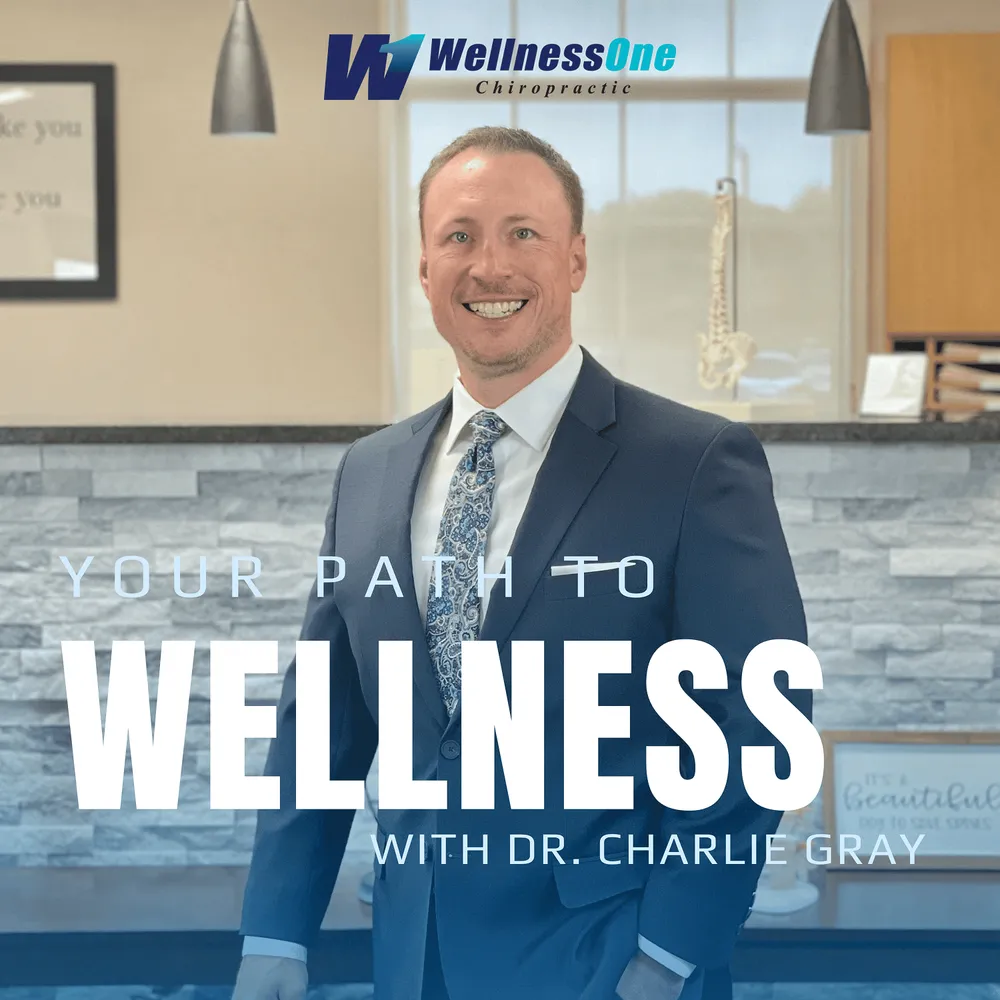
In this episode of the Wellness One podcast, Dr. Charlie Gray breaks down the everyday habits that most people never suspect are harming their posture over time. From the way you sit at your desk to how you hold your phone, these small, unconscious behaviors add up to serious consequences for your spine and overall health. Dr. Gray draws on his experience treating patients in Hickory, North Carolina, many of whom were shocked to learn the root cause of their discomfort. If you've ever wondered why your neck aches or your back feels tight despite no obvious injury, this episode is for you. Tune in to learn what to watch for and how to start making smarter, posture-friendly choices every day.
Transcript
Hey there, and welcome back. I'm Doctor Charlie Gray, and you're listening to the Wellness One podcast, coming to you from right here in Hickory, North Carolina. I'm really glad you're spending a few minutes with me today, because I want to talk about something that affects almost every single person I see in my office, and most of them had no idea it was happening until the damage was already done.
We're talking about everyday habits. The little things you do without thinking. The stuff that feels totally harmless — until your neck is stiff, your shoulders are rounded forward, and your lower back is aching at the end of every single day.
Posture damage doesn't usually happen from one big event. It sneaks up on you. It's slow. It's quiet. And that's exactly what makes it so dangerous.
So let me break this down for you.
The first habit I want to talk about is something I call the slow slump. You sit down at your desk, or on your couch, feeling totally fine. But over the next twenty or thirty minutes, gravity starts winning. Your hips slide forward. Your lower back loses its natural curve. Your head drifts toward the screen. And before you know it, you're in this collapsed, rounded position that puts enormous stress on your spine.
Here's what's interesting — your body actually starts to adapt to that position over time. The muscles that are supposed to hold you upright get weak and stretched out. The muscles in your chest and the front of your body get tight. And your spine starts to follow the path of least resistance, which is forward and down.
Now, the second habit is one that surprises people. It's how you sleep. A lot of folks sleep on their stomach, and I understand — it might feel comfortable. But when you sleep on your stomach, you have to rotate your head all the way to one side just to breathe. You hold that position for hours. Night after night. And that creates real imbalances in the muscles and joints of your neck and upper back.
The better options are sleeping on your back with a supportive pillow under your knees, or on your side with a pillow between your knees. These positions keep your spine in a much more neutral alignment while you rest.
The third habit — and this one is everywhere right now — is what people are calling tech neck. You're looking down at your phone. You're hunching over a laptop. And every inch your head tilts forward adds significant weight and stress to your cervical spine. That's the part of your spine in your neck. We're talking about a tremendous amount of extra load on the joints and discs up there, just from tilting your head forward repeatedly throughout the day.
So what can you actually do about all of this starting today? A few simple things. Set a reminder on your phone every thirty minutes to stand up, move around, and reset your posture. When you're on your phone, try raising it up to eye level instead of dropping your head. And when you go to bed tonight, try a side sleeping position with a pillow between your knees and see how you feel in the morning.
These small changes genuinely add up. Your body is incredibly adaptable — and it adapts in both directions. Bad habits break it down. Good habits build it back up.
Now, here's the thing. If you've been living with neck tension, shoulder tightness, or that nagging lower back ache — those are signs that your posture has already been affected. And that's okay. That's actually why I'm here.
At Wellness One, we take a real close look at how your spine is aligned, how your muscles are functioning, and what habits might be contributing to the problems you're feeling. And then we build a plan to actually fix it — not just mask the pain.
If any of this resonated with you today, I'd love for you to come in and see us. We're right here in Hickory, North Carolina, and we would be honored to be part of your wellness journey.
Thanks so much for tuning in. Take care of yourselves out there, make one small change today, and I'll talk to you again real soon.